
About Tanabata
Tanabata is Japan's adaptation of the Chinese Qixi legend: the weaver star Orihime (the star Vega) and the cowherd Hikoboshi (Altair), separated by the Milky Way, are permitted to meet only on the seventh night of the seventh month. The festival arrived in Japan in the 8th century via the Nara court and was eventually merged with the older Obon traditions of writing wishes on strips of paper.
For a deeper historical treatment, see Tanabata — Wikipedia.
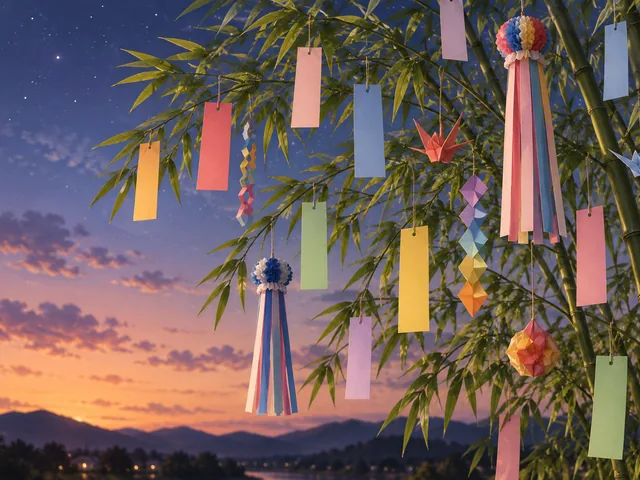
On the night of Tanabata, people across Japan write wishes on small coloured paper strips called tanzaku and tie them to bamboo branches set outside the house. After the festival the bamboo is floated down a river or burned, sending the wishes upward. The Sendai Tanabata Matsuri is the largest celebration, with vast hand-made paper streamers in the city's shopping arcades.
Traditional greetings
The phrases below are the ones most often used to mark Tanabata in person, by phone, and on cards. The native-script column shows the greeting as a recipient would read it; the transliteration is for those who would like to say it aloud; the English column is a literal rather than a poetic translation.
| Language | Greeting | Transliteration | English |
|---|---|---|---|
| Japanese | 七夕 | Tanabata | Star Festival |
| Japanese | 楽しい七夕を | Tanoshii Tanabata wo | Have a fun Tanabata |
Design tips for printable Tanabata cards
Hand-printed cards for Tanabata reward restraint and specific reference. The notes below distil what the most thoughtful cards in the tradition tend to do — and what the most commercial ones tend to get wrong.
- A bamboo branch with five-coloured tanzaku strips — the festival in one image.
- Indigo background with a faint Milky Way of small white dots is the most evocative cover.
- A folded pocket inside for a real tanzaku slip the recipient can fill in is a beloved touch.
- Use Hiragana script for the headline if your audience is Japanese; the festival's name in Kanji (七夕) reads beautifully oversized.
- Avoid Western love-iconography — Tanabata is romance, but it is celestial and quiet.
A starting palette:
Five verses for Tanabata cards
Each verse below is short enough to copy onto a folded card by hand. They progress from formal to intimate; pick the one that best fits the relationship and the year you are writing into.
- On the seventh night of the seventh month, the weaver and the cowherd meet across the river of stars. What will you write on your tanzaku?
- May the wish you tied to the bamboo this year find its way upward, and may you forget you wrote it until it quietly comes true.
- From across our own small Milky Way, thinking of you tonight. Tanoshii Tanabata wo.
- Orihime, Hikoboshi, and a sky that lets them through once a year — a gentler kind of love story.
- May the rain hold off, the stars come out, and the bamboo bend with your wishes.
Related cultural holidays
Other holidays observed in the East Asia & Pacific family of traditions: