
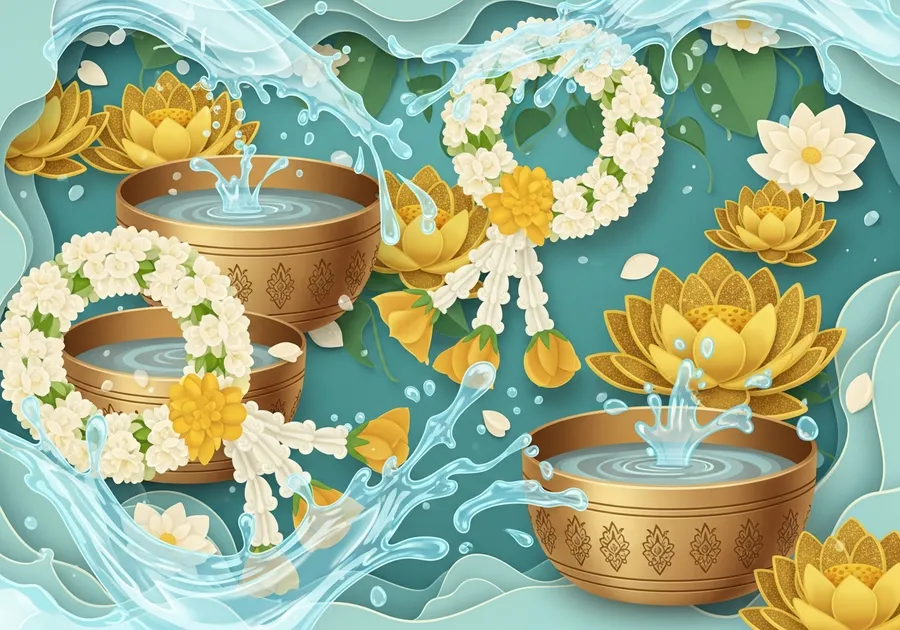
About Songkran
Songkran takes its name from the Sanskrit saṅkrānti, the astrological transition of the sun from one zodiac sign to another. In its traditional form it is a quiet rite of cleansing — household Buddhist images are bathed in scented water, monks are offered alms, and the youngest family members pour fragrant water gently over the hands of elders to ask for their blessing (rod nam dum hua). The water itself is the festival's heart: a symbol of renewal, washing away the year past.
For a deeper historical treatment, see Songkran — Wikipedia.
The public form of Songkran — three days during which the streets of Bangkok, Chiang Mai and Phuket become friendly battlefields of water guns, hoses and ice-cold buckets — emerged from this older blessing tradition. UNESCO inscribed Songkran on the Intangible Heritage list in 2023. Sister festivals across the region include Pi Mai in Laos, Choul Chnam Thmey in Cambodia, Thingyan in Myanmar, and the Dai Water-Splashing Festival in Yunnan.
Traditional greetings
The phrases below are the ones most often used to mark Songkran in person, by phone, and on cards. The native-script column shows the greeting as a recipient would read it; the transliteration is for those who would like to say it aloud; the English column is a literal rather than a poetic translation.
| Language | Greeting | Transliteration | English |
|---|---|---|---|
| Thai | สวัสดีปีใหม่ | Sawasdee pee mai | Happy New Year |
| Thai | สุขสันต์วันสงกรานต์ | Suk san wan Songkran | Happy Songkran Day |
| Lao | ສະບາຍດີປີໃໝ່ | Sabaidi pi mai | Happy New Year |
| Khmer | រីករាយឆ្នាំថ្មី | Rik reay chnam thmey | Happy New Year |
| Burmese | သင်္ကြန်နှစ်သစ်ကူးပါ | Thingyan hnit thit ku ba | Cross over to the Thingyan new year |
Design tips for printable Songkran cards
Hand-printed cards for Songkran reward restraint and specific reference. The notes below distil what the most thoughtful cards in the tradition tend to do — and what the most commercial ones tend to get wrong.
- A single brass water bowl with jasmine garlands floating in it is the more reverent face of Songkran.
- For street-festival cards, splashes of teal water across an off-white ground catch the public mood.
- Marigold and jasmine garlands (phuang malai) at the corners are a tender, distinctly Thai flourish.
- Sand pagodas (chedi sai) — built at temple grounds during Songkran — make an unusual editorial reference.
- For diaspora cards, the rod nam dum hua image (water poured over an elder's hands) carries the festival's heart.
A starting palette:
Five verses for Songkran cards
Each verse below is short enough to copy onto a folded card by hand. They progress from formal to intimate; pick the one that best fits the relationship and the year you are writing into.
- May this Songkran wash off whatever the last year caked onto you, and leave only the clean shape underneath. Suk san wan Songkran.
- Water poured over the elder's hands, water poured over the small Buddha, water poured over a stranger in the street — all of it the same blessing.
- Sawasdee pee mai. May the new year be cool, kind, and wet enough to make you laugh.
- From the temple to the street to the bus station to the family home — the whole country wishing each other the same thing. Happy Songkran.
- From our family to yours, jasmine on the water, a long bow to the elders, and a bucket for the rest of the day.
Related cultural holidays
Other holidays observed in the East Asia & Pacific family of traditions: