
About Seollal
Seollal is the Korean Lunar New Year, observed since the Three Kingdoms period. Like its East Asian cousins it falls on the first new moon of the lunisolar calendar, and like Chuseok it is a three-day public holiday during which most Koreans return to their family hometowns. The day begins with charye, the ancestral rite, followed by sebae — a deep bow from younger family members to elders, who reply with a few words of advice and small cash gifts (sebaetdon).
For a deeper historical treatment, see Seollal — Wikipedia.
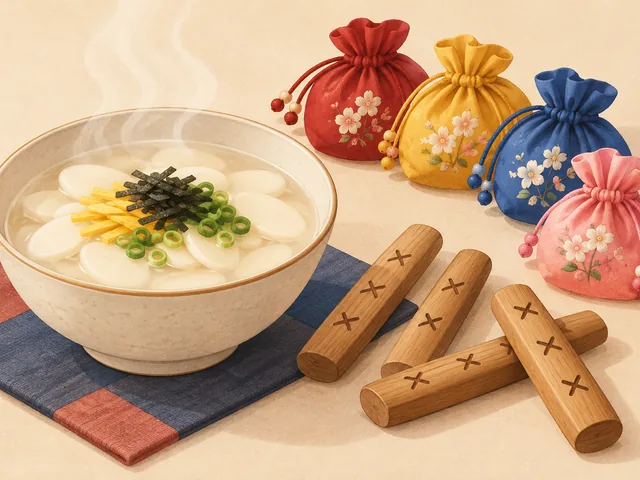
The defining food is tteokguk, a clear broth with sliced rice cakes that is said to add a year to whoever eats it (Koreans traditionally count their age from Seollal, not their birthday). Children play traditional games — yutnori board, jegichagi, neolttwigi (the standing seesaw) — and many wear hanbok at least for the bow. Cards exchanged at Seollal are warmer and more personal than New Year corporate cards in the Chinese tradition.
Traditional greetings
The phrases below are the ones most often used to mark Seollal in person, by phone, and on cards. The native-script column shows the greeting as a recipient would read it; the transliteration is for those who would like to say it aloud; the English column is a literal rather than a poetic translation.
| Language | Greeting | Transliteration | English |
|---|---|---|---|
| Korean | 새해 복 많이 받으세요 | Saehae bok mani badeuseyo | May you receive much new-year blessing |
| Korean | 설날 잘 보내세요 | Seollal jal bonaeseyo | Have a good Seollal |
| Korean | 복 많이 받으시고 건강하세요 | Bok mani badeusigo geonganghaseyo | Receive much blessing and be healthy |
Design tips for printable Seollal cards
Hand-printed cards for Seollal reward restraint and specific reference. The notes below distil what the most thoughtful cards in the tradition tend to do — and what the most commercial ones tend to get wrong.
- Pastel hanbok colours — the official "obangsaek" five — palette of red, blue, yellow, white and black, used softly.
- A small porcelain bowl of tteokguk is more recognisable than dragons or zodiac animals.
- The kkachi (magpie) — a 1980s broadcast mascot for the holiday — is a beloved nostalgic motif for older Koreans.
- Use traditional Korean knot motifs (maedeup) along the spine of the card.
- Inside, leave room for a hand-written sebae line from the elder to the younger.
A starting palette:
Five verses for Seollal cards
Each verse below is short enough to copy onto a folded card by hand. They progress from formal to intimate; pick the one that best fits the relationship and the year you are writing into.
- Saehae bok mani badeuseyo — may this new year bring you a little of everything you meant to ask for.
- A bowl of tteokguk, a deep bow to the elders, a new year and a new age all at once — blessed Seollal.
- From our family to yours, the slow walk home, the warm greeting, the quiet tea after the rite. Happy Seollal.
- May this year find you healthy, your family round you, and your tteokguk hot.
- Bok mani badeusigo geonganghaseyo — blessings, health, and the year you have been waiting for.
Related cultural holidays
Other holidays observed in the East Asia & Pacific family of traditions: