About Nowruz
Nowruz — 'new day' in Persian — is one of the oldest continuously celebrated holidays in the world, with roots in pre-Islamic Zoroastrian Iran more than 3,000 years ago. It begins at the precise moment of the vernal equinox, when the sun crosses the celestial equator and the northern hemisphere tips toward spring. UNESCO inscribed it on the Intangible Heritage list in 2009 and the UN recognises 21 March as International Nowruz Day.
For a deeper historical treatment, see Nowruz — Wikipedia.
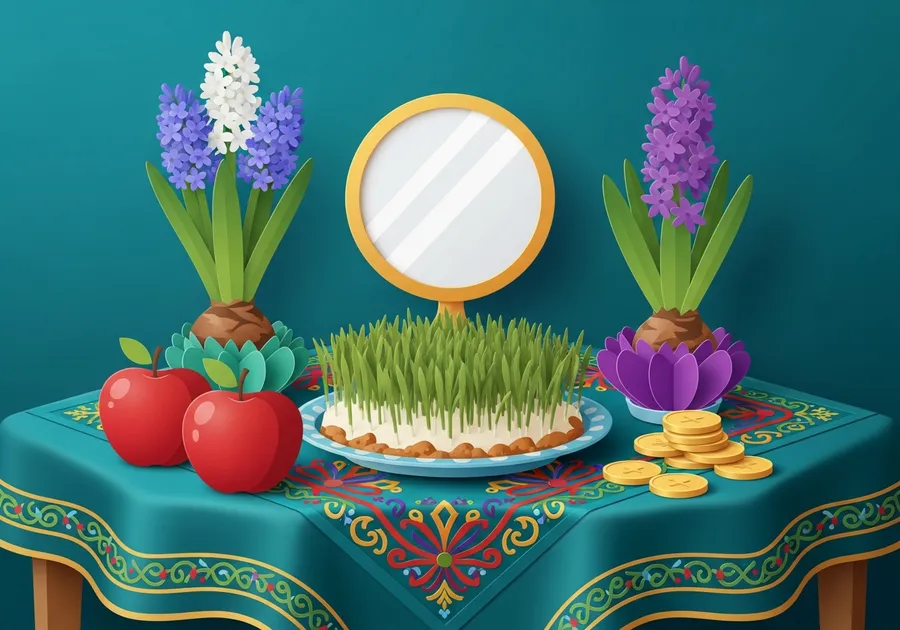
The household centrepiece is the haft-sin table — seven items beginning with the Persian letter 'sin' that each carry a symbolic wish: sabzeh (sprouted wheat) for rebirth, samanu (sweet pudding) for affluence, senjed (dried lotus berries) for love, seer (garlic) for medicine, seeb (apples) for beauty, somaq (sumac) for sunrise, serkeh (vinegar) for patience. A mirror, painted eggs, a goldfish in a bowl and a holy book or book of poetry (Hafez or Shahnameh) sit alongside. Thirteen days later, on Sizdah Bedar, families take the sprouted wheat to a river and let the year's wishes float away.
Traditional greetings
The phrases below are the ones most often used to mark Nowruz in person, by phone, and on cards. The native-script column shows the greeting as a recipient would read it; the transliteration is for those who would like to say it aloud; the English column is a literal rather than a poetic translation.
| Language | Greeting | Transliteration | English |
|---|---|---|---|
| Persian | نوروز مبارک | Nowruz Mobarak | Blessed Nowruz |
| Persian | سال نو مبارک | Sal-e No Mobarak | Happy New Year |
| Persian | عید شما مبارک | Eid-e shoma Mobarak | Blessed festival to you |
| Kurdish | Newroz pîroz be | Blessed Newroz | |
| Azerbaijani | Novruz bayramınız mübarək olsun | Blessed Novruz festival | |
| Tajik | Наврӯз муборак | Navruz Muborak | Blessed Navruz |
Design tips for printable Nowruz cards
Hand-printed cards for Nowruz reward restraint and specific reference. The notes below distil what the most thoughtful cards in the tradition tend to do — and what the most commercial ones tend to get wrong.
- A goldfish in a bowl, a sprouted wheat dish, or a single hyacinth — pick one element of the haft-sin and centre on it.
- Persian miniature painting palettes — turquoise, lapis, gold, vermilion — are exactly right for Nowruz.
- Calligraphic Persian script in Nastaliq for the headline; if you can find a foundry that licences a digital Nastaliq, use it.
- For Kurdish recipients, the bonfire of Newroz (and the colours red, yellow, green) are the more familiar references.
- Leave space for a hand-written line of Hafez — most Persian families consult the divan on the new year.
A starting palette:
Five verses for Nowruz cards
Each verse below is short enough to copy onto a folded card by hand. They progress from formal to intimate; pick the one that best fits the relationship and the year you are writing into.
- At the moment the sun crosses the equator, may something old in your life cross with it — and leave room for spring. Nowruz Mobarak.
- Seven small things on a low table, each one a wish for the year. May all seven find you. Sal-e No Mobarak.
- From the snow on Damavand to the sea at Bandar Abbas, from Kabul to Tashkent to Baku to your door — blessed Nowruz.
- May this year bring you health like sabzeh, love like senjed, patience like serkeh, and poems like Hafez. Nowruz Mobarak.
- On Sizdah Bedar, take the small green dish to the river and let it carry away whatever the year ahead does not need you to keep.
In the Greet Grove directory
The full directory entry for Nowruz — including its calendar dates, source attribution, and any additional verses — is on the occasion page.
Related cultural holidays
Other holidays observed in the Middle East & North Africa family of traditions: