
About Enkutatash
Enkutatash — 'gift of jewels' in Amharic — falls on the 1st of Meskerem in the Ethiopian calendar (11 September Gregorian, or 12 in years preceding a Gregorian leap year). It marks the end of the long rainy season (kiremt) and the start of the dry, sunny months. The festival's name is traced to the legend of the Queen of Sheba's return from her visit to King Solomon: her courtiers welcomed her home with chests of jewels, the 'gifts' that gave the holiday its name.
For a deeper historical treatment, see Enkutatash — Wikipedia.
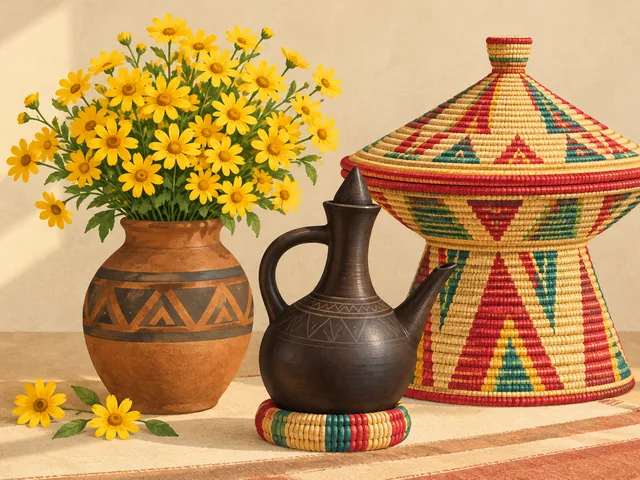
Modern Enkutatash blends religious and rural traditions: morning church services, then daughters of the household visiting elders to sing the new-year song (Abebayehosh), receiving small gifts and bunches of yellow meskel daisies in return. Cards exchanged for Enkutatash are warm and informal, often featuring the daisy itself or the highland landscape it covers.
Traditional greetings
The phrases below are the ones most often used to mark Enkutatash in person, by phone, and on cards. The native-script column shows the greeting as a recipient would read it; the transliteration is for those who would like to say it aloud; the English column is a literal rather than a poetic translation.
| Language | Greeting | Transliteration | English |
|---|---|---|---|
| Amharic | መልካም አዲስ ዓመት | Melkam Addis Amet | Happy New Year |
| Amharic | መልካም እንቁጣጣሽ | Melkam Enkutatash | Happy Enkutatash |
| Tigrinya | ርሑስ ሓድሽ ዓመት | Rehus Hadish Amet | Happy New Year |
Design tips for printable Enkutatash cards
Hand-printed cards for Enkutatash reward restraint and specific reference. The notes below distil what the most thoughtful cards in the tradition tend to do — and what the most commercial ones tend to get wrong.
- A single yellow meskel daisy, simply rendered, is the festival in one image.
- Use the highland palette: misty blue-green, ochre, white, with the daisy yellow as accent.
- Geez (the Ethiopian script) makes a beautiful headline; pair with a quiet English sub-line.
- For diaspora cards, include the date in both the Ethiopian and Gregorian calendars.
- Inside, leave room for an Abebayehosh line — the song daughters sing on the day.
A starting palette:
Five verses for Enkutatash cards
Each verse below is short enough to copy onto a folded card by hand. They progress from formal to intimate; pick the one that best fits the relationship and the year you are writing into.
- Melkam Addis Amet. May the rains end on time, the highlands turn yellow, and the year ahead be bright as the meskel.
- From a country whose new year arrives in the gentlest weather of the year — blessings on your Enkutatash.
- May the gift of this new year be a gift of jewels — or at least, a gift of yellow daisies on the kitchen table.
- Melkam Enkutatash. The kiremt is over. The sky is wide. The road is dry. Walk it well.
- From our family to yours, the quiet pleasure of a new year that begins in good weather.
In the Greet Grove directory
The full directory entry for Enkutatash — including its calendar dates, source attribution, and any additional verses — is on the occasion page.
Related cultural holidays
Other holidays observed in the Africa family of traditions: